Christian Meditation: A Transformational Approach to Calming Your Inner World
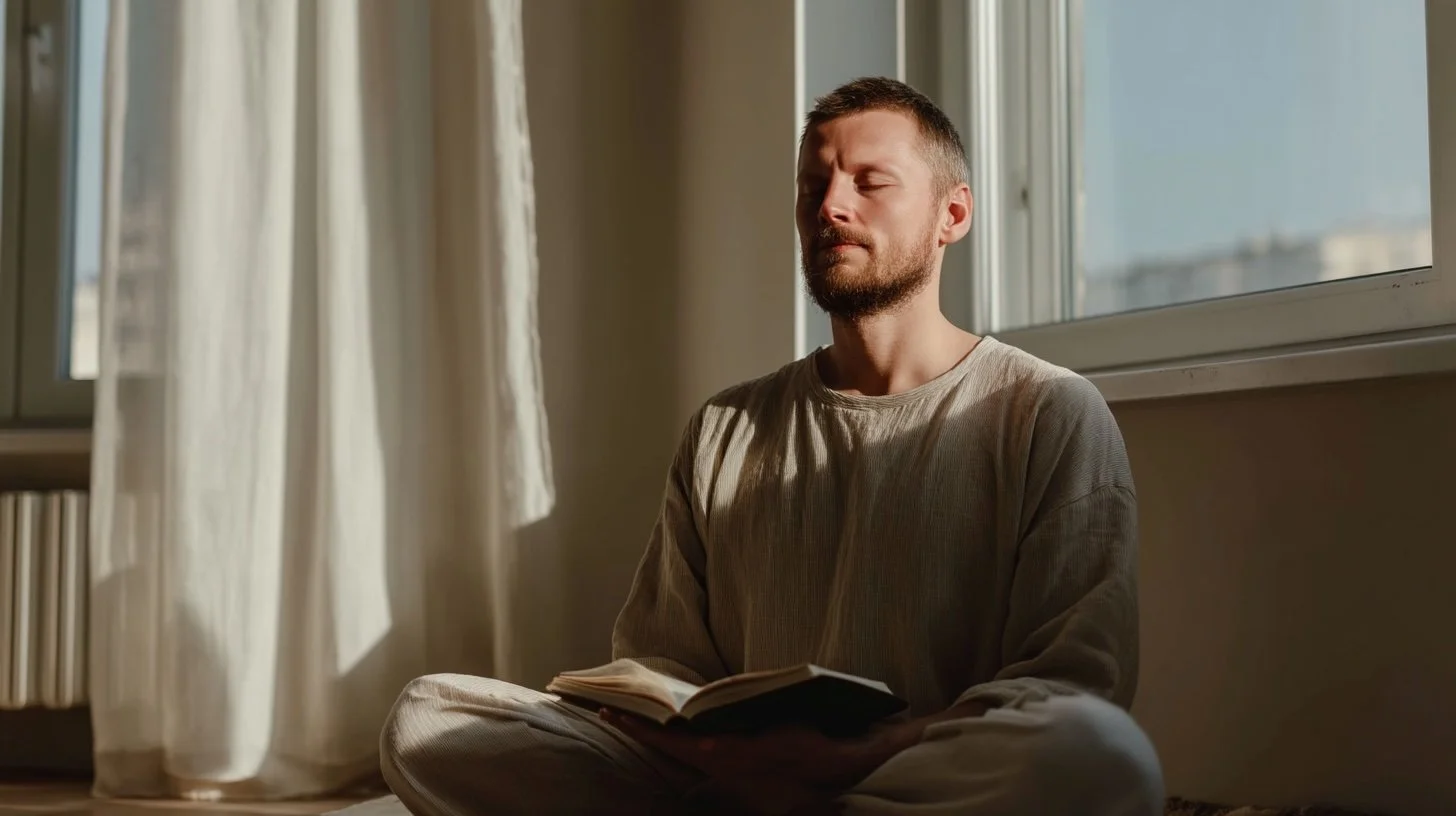
Framing verse: “You keep him in perfect peace whose mind is stayed on You, because he trusts in You.” (Isaiah 26:3)
When Your Inner World Won’t Stop Spinning
Some people describe anxiety like a siren. Others describe it like a low hum that never shuts off. Either way, it does something exhausting: it turns your inner world into a constant monitoring system. You watch your mood. You watch your body. You watch other people’s reactions. You watch the future. You watch your past for proof that you will repeat it again.
You might love Jesus deeply and still feel internally frantic. You might read your Bible and still feel your mind sprint ahead to the next problem. You might pray and still struggle to feel grounded. And then, to make it worse, you can start feeling guilty for struggling. You wonder why peace feels so far away when Scripture talks about peace like it is supposed to be normal.
If that’s you, take a breath. This is not a “try harder” conversation. This is an invitation to slow down and receive something many believers miss: a steady, biblical practice that helps your soul come back to center. Christian meditation is not a trendy technique. It is a time-tested, Scripture-rooted way of training your heart to settle in God’s presence and let His Word sink deeper than your swirling thoughts.
The goal is not to become a monk, float through life, or avoid hard emotions. The goal is to be formed. To be steadied. To become the kind of person who can feel big feelings without being owned by them. The kind of person who can face a hard day without losing their footing. The kind of person who can carry peace into a chaotic world because their inner world is anchored to Christ.
What Christian Meditation Is (And What It Is Not)
The word “meditation” can mean different things depending on who is talking. Some approaches focus on emptying the mind, dissolving desire, or attempting to detach from the self. But meditation christian practice has a different center: we are not trying to disappear into calm. We are coming alive in communion with God.
Christian meditation is:
✓ A slow, prayerful dwelling on Scripture and God’s character.
✓ A way of “setting your mind” on what is true when your thoughts are loud.
✓ A practice of abiding with Jesus rather than striving to fix yourself.
✓ An invitation to let truth move from your head into your nervous system, habits, and relationships.
✓ A Spirit-led process of receiving God’s presence, not merely collecting religious information.
Christian meditation is not:
✗ Emptying your mind as an end goal.
✗ Trying to earn peace by performing spiritual disciplines perfectly.
✗ A guarantee that you will never feel anxiety again.
✗ A replacement for wise boundaries, professional support, or community.
✗ A way to control outcomes, force answers, or manipulate God into giving you what you want.
The Bible’s vision is not “blank mind.” The Bible’s vision is a renewed mind. Scripture invites you to bring your thoughts under the authority of Christ, not to pretend you do not have thoughts at all.
“Do not be conformed to this world, but be transformed by the renewal of your mind…” (Romans 12:2)
Renewal is a process. Christian meditation is one of the ways God shapes that process in everyday life.
How This Differs From Secular Mindfulness
You may notice overlap in the “how”: quiet, breathing, slowing down, paying attention. Those are common-grace tools. God is not threatened by a quiet room or a slower breath. But the center matters. The “why” matters. The authority matters.
✓ The focus is not “nothingness.” It is Jesus, and the Word of God.
✓ The goal is not only stress relief. It is spiritual formation and obedience (Romans 12:2).
✓ You are not doing this on your own steam. The Holy Spirit illuminates Scripture and strengthens you.
✓ You are not meant to become self-sufficient. You are meant to abide in Christ (John 15:5).
✓ We bring every practice under the authority of Scripture and the kindness of Jesus.
If you have tried mindfulness and found it helpful in small ways, you do not need to panic. But if you felt like something was missing, you are probably noticing the difference between technique and presence. Christian meditation is not simply a mental skill. It is relational surrender. It is learning to live from God’s nearness rather than your nervous system’s alarm.
Why Christian Meditation Calms Your Inner World
Many believers assume “calm” is something you either have or you do not. But Scripture paints calmness as something cultivated: peace that grows as you learn to trust God, renew your mind, and practice abiding. Christian meditation helps in at least five ways.
1. It retrains your attention
Anxiety often hijacks attention. It locks your focus onto potential danger, potential rejection, potential failure, potential loss. Christian meditation gently redirects attention toward God’s character and promises. You are not ignoring reality. You are refusing to let fear be the narrator.
2. It gives you language when you feel flooded
Scripture provides vocabulary for grief, fear, anger, confusion, hope, and longing. The Psalms are especially powerful here. When you cannot find words, Scripture lends you words.
3. It anchors you in God’s presence, not your performance
The peace of Christ is not a reward for doing quiet time correctly. It is a gift of union with Christ. Meditation helps you stop “using” God to feel better and start being with God because He is your refuge.
4. It turns truth into reflex
Many people know verses but do not feel them. Christian meditation is how truth moves from “I’ve heard that” to “this is in my bones.” You chew on one phrase long enough that it shows up in real time—when you are triggered, tired, tempted, or overwhelmed.
5. It supports your nervous system while feeding your spirit
You are not only a soul. You are embodied. When you slow down, breathe, and focus on Scripture, you are helping your body come out of survival mode. That is not “unspiritual.” It is stewardship. God made you whole.
Seven Christian Meditation Practices You Can Start This Week
You do not need all seven. Pick one or two that fit your season. Keep it simple. Keep it honest. Christian meditation is not impressive. It is faithful.
1. Breath Prayer
Anchor: “When I am afraid, I put my trust in You.” (Psalm 56:3)
Choose a short line of Scripture and pair it with slow breathing. Inhale for a count of four and whisper the first phrase. Exhale for a count of six and whisper the second phrase. For example: inhale, “When I am afraid…” exhale, “…I trust You.” There is no magic in the formula. This is simply a way to connect body and belief when anxiety spikes. Over time, repetition turns truth into your knee-jerk response instead of fear.
2. Lectio Divina (Slow Read • Notice • Talk • Rest)
Anchor: “Open my eyes that I may see wonderful things in Your law.” (Psalm 119:18)
Read a short passage slowly. Notice the word or phrase that “lands.” Tell God why it stood out. Ask questions like: “What does this show me about You?” “What are You inviting me to trust?” Then sit quietly for one minute—no agenda but being with Him. This rhythm helps Scripture move from eyes to heart.
3. Scripture Repetition and Memorizing on the Go
Anchor: “I have stored up Your word in my heart…” (Psalm 119:11)
One verse. That is it. Write it on a sticky note. Put it on your mirror. Set it as your lock screen. Say it while you brush your teeth, wash dishes, or sit at a red light. When your mind drifts, gently come back—no self-shaming required. Lies love to loop. Truth needs repetition too.
4. Gospel Imagination
Anchor: “Fixing our eyes on Jesus…” (Hebrews 12:2)
Step into a Gospel scene. Hear the water slap the boat. Feel the dust on the road. Watch Jesus move toward the hurting. Ask: “What are You showing me about Yourself?” “How do You treat the anxious, the grieving, the ashamed?” Write one sentence about what you notice. Engaging your senses slows the swirl long enough for compassion to land.
5. Lament Meditation (Honest Prayer With Scripture)
Anchor: “Why are you cast down, O my soul… Hope in God.” (Psalm 42:5)
Lament is not a lack of faith. It is faith that tells the truth in God’s presence. Read a lament Psalm (Psalm 13, Psalm 42, Psalm 88). Notice how the writer names pain without pretending. Then echo it in your own words: “God, this is what hurts.” “This is what I fear.” “This is what I do not understand.” End by repeating one truth about God’s character, even if your feelings lag behind.
6. “Name and Release” Meditation
Anchor: “Cast all your anxieties on Him, because He cares for you.” (1 Peter 5:7)
Make a short list: the worry you keep rehearsing, the conversation you keep replaying, the outcome you keep trying to control. Name each one in prayer and release it to God: “Jesus, I give You this.” After each release, speak a truth: “You care for me.” “You are with me.” “You will guide me.” This practice is especially helpful for overthinking at night.
7. Listening Prayer
Anchor: “Speak, Lord, for Your servant is listening.” (1 Samuel 3:9)
Set a gentle timer (two to five minutes). Start with that simple line. When distractions show up (they will), acknowledge them and come back. End by thanking God for whatever surfaced—even if it was just stillness. We talk a lot. Listening forms us too.
A Rhythm You Can Actually Keep
You do not need a stopwatch. Carry these four movements into any day, whether you have five minutes or thirty.
Settle – A few slow breaths: “Holy Spirit, lead me.”
Scripture – Read once aloud, once quietly. Notice what shimmers.
Sit With It – Stay with that word or phrase using one practice above.
Respond – Thank Him. Journal a couple of lines. Pray for someone the verse brings to mind. Take one small obedient step.
One verse well chewed often does more than ten chapters skimmed out of guilt.
Two Real-Life Snapshots
Maria taped Psalm 23 inside a bathroom cabinet. With toddlers underfoot, long quiet times were a dream. Every time she washed her hands she read one line out loud. A month later, the whole psalm was in her bones. “I did not feel super spiritual,” she laughed, “but those tiny moments changed my day.”
Jared started using traffic lights as prayer cues. He used to grip the wheel and stew. Now, at red lights, he breathes: inhale, “You are near,” exhale, “I am Yours.” Weeks later he said, “I still get irritated, but the verse shows up before the rant.” Small shifts. Big fruit.
This is what Christian meditation often looks like in real life: not a perfect routine, but repeated returns. A gentle practice that meets you in the places you already live.
Common Obstacles (And Gentle Responses)
“My mind keeps wandering.” Welcome to the club. When you notice it, just come back. No self-lecture needed. Wandering minds still meet a faithful God.
“This feels boring. Am I doing it wrong?” Probably not. Boredom can mean your soul is detoxing from constant noise. Depth grows in quiet soil. Keep showing up.
“I do great for three days and then it falls apart.” Shrink the goal. Two minutes daily beats twenty minutes once a week. Ask a friend to nudge you midweek. Build a rhythm you can repeat, not a standard you can only admire.
“I cannot feel God at all.” Psalm 88 ends without a tidy bow. Feeling abandoned is not being abandoned. Keep anchoring your mind to what is true, not only to what you feel.
“Isn’t this just therapy stuff with Bible verses?” God is not threatened by slow breathing or quiet rooms. Common-grace tools are fine. We just make sure Jesus is the center and Scripture is the authority.
“I’m afraid I’ll do this ‘wrong’ and waste time.” If you showed up, you did not waste time. God is not grading your quiet minutes. He is meeting you. The goal is communion, not perfection.
Verses to Sit With This Week
Choose one a day or camp on one for several days. Write it somewhere you will see it. Let it interrupt you.
✓ Psalm 23 – Restless nights and anxious hearts
✓ Isaiah 26:3 – Peace for the mind that will not quit
✓ Matthew 11:28–30 – When you feel tired and heavy
✓ Philippians 4:6–8 – Trading panic for prayer and peace
✓ John 14:27 – Receiving the peace Jesus gives
✓ Psalm 62:5–8 – Pouring out your heart and remembering your refuge
✓ 2 Timothy 1:7 – Power, love, and self-control instead of fear
✓ Romans 8:1 – No condemnation when shame is loud
✓ Psalm 46:1–2 – Refuge and strength when life feels unstable
A Guided Christian Meditation (10 Minutes, Simple and Honest)
If you have never tried Christian meditation, start here. You can do this sitting at a table, on a couch, or in your car before work. The goal is not a mystical experience. The goal is to meet God in Scripture and let truth steady your inner world.
1) Settle (1–2 minutes)
Put your feet on the ground. Relax your shoulders. Inhale slowly through your nose for a count of four. Exhale slowly for a count of six. Do this five times. As you breathe, whisper: “Holy Spirit, lead me.”
2) Read (2 minutes)
Read Philippians 4:6–7 out loud twice. The second time, read slower than you want to.
“Do not be anxious about anything, but in everything by prayer and supplication with thanksgiving let your requests be made known to God. And the peace of God, which surpasses all understanding, will guard your hearts and your minds in Christ Jesus.” (Philippians 4:6–7)
3) Notice (2 minutes)
What word or phrase stands out? “Anything.” “In everything.” “Peace of God.” “Will guard.” Do not overthink it. Just notice what your heart keeps returning to.
4) Talk to God (2 minutes)
Turn the verse into prayer. For example: “Father, I bring You what I keep carrying. I ask You to guard my heart and mind in Christ. Teach me to release control and receive Your peace.” Add one sentence about what is real today.
5) Rest (1–2 minutes)
Sit quietly. If your mind wanders, gently return to the phrase that stood out. You are not “failing” when you wander. You are practicing return.
6) Respond (1 minute)
Take one small action. Write down the phrase you noticed. Text a trusted friend: “I’m holding Philippians 4:7 today.” Or set the verse as your lock screen. Let truth stay close.
FAQs
Is Christian meditation biblical?
Yes. Scripture repeatedly describes meditating on God’s Word (Psalm 1:2; Joshua 1:8; Psalm 119:15). The practice is not about emptying your mind, but filling it with God’s truth and letting it sink in.
How long should I do it?
Start with five to ten minutes. Keep it life-giving, not burdensome. Consistency matters more than intensity.
What if I fall asleep?
Then you probably needed rest. Thank God for the nap. Try earlier in the day tomorrow. Rest is not a spiritual failure.
Is this the same thing as yoga?
Not necessarily. Some postures can be neutral, but the spiritual framework matters. Christian meditation is Christ-centered and Scripture-saturated. If a practice pulls you away from Jesus or blurs spiritual authority, choose something clearer and safer for your conscience.
What if I have trauma and silence feels scary?
Go gently. Start with Scripture out loud and very short silence—thirty seconds is enough. You can also meditate while walking, washing dishes, or sitting with a trusted friend nearby. God is kind. He does not demand you force yourself into a triggering situation to prove faith.
Will this “cure” my anxiety?
Christian meditation is not a guarantee of symptom-free living. But it is a powerful practice for renewing your mind, calming your body, and learning to abide. Many people see real shifts over time: less spiraling, quicker recovery after triggers, deeper peace, clearer boundaries, more honest prayer, and steadier trust.
Do I still need counseling or professional support?
Sometimes, yes. Anxiety can have spiritual, physical, emotional, and relational layers. God often heals through wise people and practical tools. Christian meditation can be part of your healing rhythm alongside counseling, coaching, and supportive community.
A Simple Prayer You Can Borrow
Father, You see how scattered my mind feels. I want to meet You, but I keep drifting. Thank You that You do not roll Your eyes at my weakness. You invite me close.
Jesus, be my anchor when thoughts run wild. Let Your Word land in places I usually rush past. Teach me to chew on truth until it changes me.
Holy Spirit, lead me. Catch me when I wander. Help me take my thoughts captive and hand them back to You. Even if all I can do today is whisper one verse, meet me there.
Amen.
Conclusion
Your inner world does not have to stay chaotic. Peace is not a personality trait you either inherited or missed. Peace is a fruit of abiding. And Christian meditation is one of the simplest, most accessible ways to practice abiding in real life.
Start small. Stay honest. Return when you drift. Let Scripture become your steady soundtrack. Over time, you may notice something subtle but profound: the verse shows up before the spiral. The prayer shows up before the panic. The presence of God feels less like a theory and more like a refuge.
You do not need to impress God. You just need to meet Him.
Next Steps & Internal Links
Want help applying this when anxiety spikes? Read “Biblical Ways to Beat Anxiety” (anxiety biblical).
Need a fuller framework for Scripture-centered slowing down? Read “Christian Meditation Techniques” (meditation biblical).
Curious about how counseling and psychology differ for Christians? Check “Counseling vs. Psychology” (counseling psychology).
You Do Not Have to Do This Alone
If you are tired of trying to muscle your way into peace, we understand. Many people in our community are learning these rhythms one small step at a time. If you want help building a plan that fits your season, we are here.
If anxiety has been loud lately, our Freedom From Anxiety course is a Scripture-centered pathway for calming spirals and taking thoughts captive with practical tools. If you need personal support, consider one-on-one coaching. And if you want to explore the full library of resources, you can browse all courses here.
Send a quick note that says, “I need help,” and we will point you to the next right step. If you are unsure where to begin, ask for a short check-in conversation and we will figure it out together.